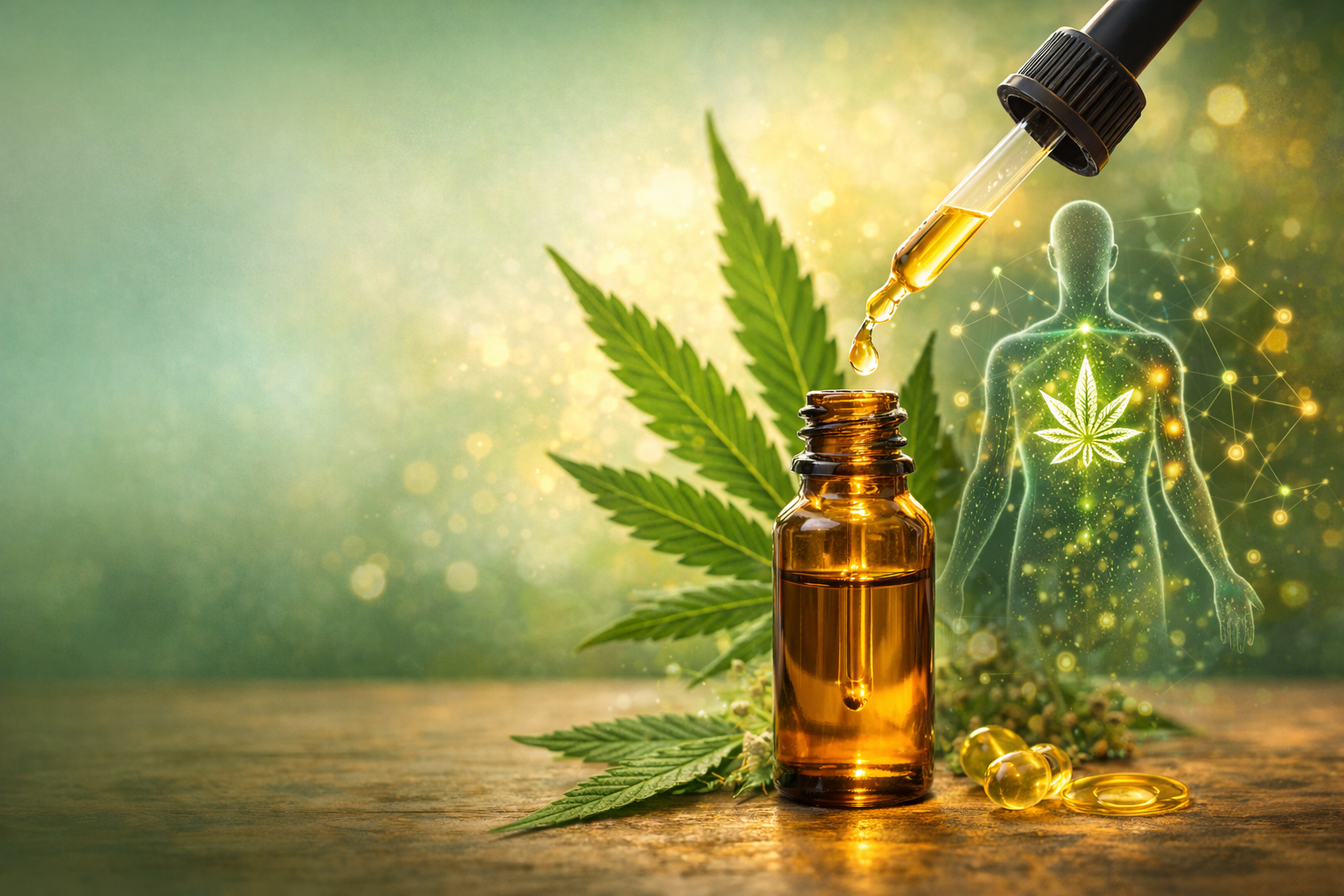
CBD oil: what it is and how it is made
CBD oil is a familiar hemp-derived format made by combining a cannabinoid extract with a carrier oil. Different extracts and concentrations produce different formulas.
Compare CBD oils and tinctures
What is CBD?
CBD stands for cannabidiol, one of the cannabinoids found in cannabis. Hemp varieties associated with cannabis light are selected for very low THC levels and can contain CBD and other cannabinoids.
CBD and THC are different compounds. Their presence and concentrations form part of a product’s composition, rather than describing its bottle size or format.
How CBD oil is produced
Cannabinoids are extracted from plant material and the extract is combined with a carrier oil, often MCT or another vegetable oil. The exact carrier must be checked for each product. This produces oils with different concentrations, ingredients and extract profiles.
Concentration and bottle size
Percentage, milligrams and millilitres describe different things. Compare the stated concentration, total CBD per bottle and volume together. A higher concentration does not make all the other ingredients or product specifications identical.
The category comparison table gives the stated figures for the reviewed 10 ml oils. For more detail, read how to compare CBD oil percentages.
CBD oil and other cannabinoids
Hemp contains cannabinoids such as CBD, CBG, CBN and THC. An extract may include several compounds, depending on its formulation. Full spectrum and broad spectrum are extract designations; the actual ingredient and composition information remains specific to each product.
Other hemp-derived formats
CBD flowers, hash, teas and edibles are different formats. Oils should also be distinguished from mixed formulas and products intended for animals. Consult the intended use and manufacturer instructions for the individual item.